Why This Happens So Much in Shih Tzus
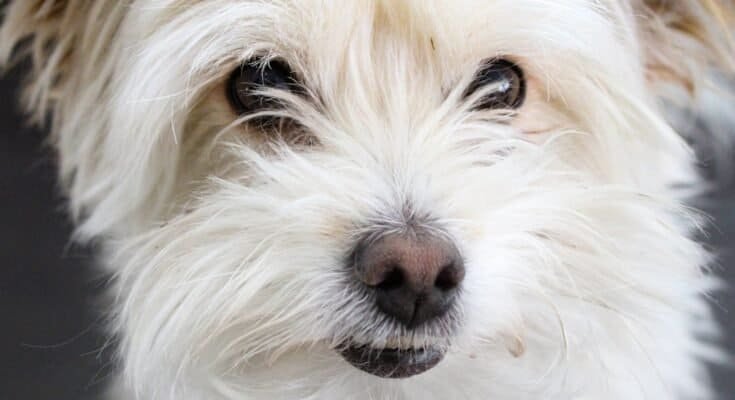
The medical term is epiphora, excessive tearing or poor tear drainage. PetMD explains that the reddish-brown staining itself comes from a pigment in tears called porphyrin, which shows up most visibly on light-colored fur, exactly the coat type Shih Tzus are known for.
Shih Tzus are also a brachycephalic breed, and facial structure plays a real role here. Veterinary sources note that when facial anatomy prevents tears from draining efficiently through the nasolacrimal duct, some degree of overflow is common even in an otherwise healthy dog. Add prominent eyes and long facial hair that can rub against the eye surface, and you have a breed that’s simply more prone to this than most.
Shih Tzus, Lhasa Apsos, Maltese, and Bichon Frises are consistently named among the breeds most prone to tear staining in veterinary literature. If your Shih Tzu has some staining, that alone doesn’t mean something is wrong.
A Safe Daily Routine
-
Wipe daily, not weekly Use a clean, damp, soft cloth to gently wipe the area under the eyes once a day. Consistency matters more than any specific product.
-
Keep the hair trimmed and dry Ask your groomer to keep the fur around the eyes short so moisture doesn’t sit against the skin, and the area stays visible enough for you to monitor.
-
Dry thoroughly after wiping Damp skin under the eyes is exactly the environment that lets yeast and bacteria take hold. Pat the area fully dry every time.
-
Watch, don’t just wipe Use the daily cleaning routine as a check-in. You’ll notice a change in color, smell, or the skin underneath long before it becomes a bigger problem.
The American Shih Tzu Club has flagged that some tear-stain removal products contain tylosin tartrate, an antibiotic, without listing it clearly on the label to avoid regulatory scrutiny. Long-term, unsupervised antibiotic use isn’t something to take lightly. Talk to your vet before using any tear-stain product marketed as a supplement or powder, rather than assuming over-the-counter means harmless.
When It’s More Than Cosmetic
Staining by itself is usually a grooming issue, not a medical one. But the color, pattern, and any accompanying symptoms matter.
Usually just cosmetic
- Mild, symmetrical staining on both eyes
- Clear or slightly tinted tears
- No squinting, redness, or odor
- Skin underneath looks normal, not raw
See a vet
- Sudden onset or one-sided staining
- Yellow or green discharge
- Squinting, redness, or visible pain
- Strong odor or raw, inflamed skin
- Excessive face rubbing or pawing at the eye
PetMD is direct about this: discharge that turns yellow or green, or a dog that starts squinting, can point to an infection or a corneal ulcer, and needs veterinary attention rather than a change in wipe brand.
The Bottom Line
Tear stains on a Shih Tzu are common enough that they’re almost a breed trait, not a red flag on their own. What actually matters is watching for the things that separate ordinary staining from something that needs a vet: sudden changes, one-sided symptoms, discharge color, and pain. Cooper still gets his stains wiped every morning. They still show up. They just don’t worry me the way they did the first time.