When I first brought Cooper home, I had no idea how much research I’d end up doing about food. He seemed fine with chicken at first. Then came the rashes, the coat loss, the confusion. Even after I switched foods, the same thing happened again with a formula labeled “chicken flavor.” That’s when I found out Cooper is allergic to chicken, flavoring included.
That experience changed how I think about feeding a Shih Tzu. What seems harmless often isn’t, and what seems complicated is usually just a matter of knowing what to look for.
This is the shih tzu food list I wish I’d had from day one.
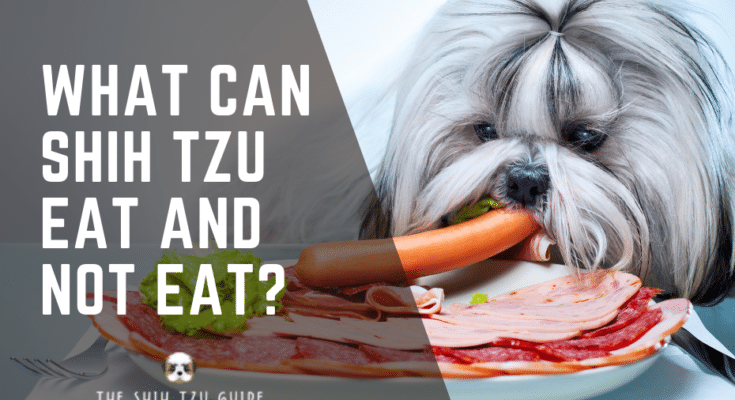
What Can Shih Tzu Eat and Not Eat?
Foods Shih Tzus Cannot Eat
Some of these are obvious. Others will surprise you. All of them are worth knowing before an accident happens.
1. Chocolate
Chocolate contains a compound called theobromine that dogs cannot process the way humans do. In people, it clears the body within a couple of hours. In dogs, it stays in the system for up to 17.5 hours, giving it time to build up and cause serious harm. This is well established in veterinary research and covered by the Merck Veterinary Manual.
Dark chocolate and cocoa powder are the most dangerous because they are far more concentrated than milk chocolate. For a small dog like a Shih Tzu, even a modest piece can be enough to cause a serious reaction. A study tracking over 150 real dog cases found that most of the dogs who got seriously ill had eaten dark or bitter chocolate.
Symptoms usually appear within 6 to 12 hours: vomiting, diarrhea, restlessness, rapid breathing, and in worse cases, seizures or heart problems. There is no antidote, so getting help quickly is what matters most.
What to do: Call your vet or poison control right away. Do not wait to see if symptoms develop.
2. Grapes and Raisins
Grapes and raisins can cause sudden kidney failure in dogs, sometimes after eating just a small amount. For years, no one knew exactly why. ASPCA Poison Control Center researchers eventually identified tartaric acid, a naturally occurring compound in grapes, as the likely cause. This finding is now supported by published veterinary research and recognized by Cornell University College of Veterinary Medicine.
What makes this especially tricky is that there is no known safe amount. Some dogs have eaten a small handful and ended up in kidney failure. Others have eaten more and shown no reaction. Because it is impossible to know how sensitive your dog is, every exposure should be taken seriously. In one study of 43 affected dogs, only about half fully recovered.
Early signs include vomiting, lethargy, and loss of appetite within a few hours. Kidney failure can follow within one to three days.
This includes raisins hidden in trail mix, granola, cookies, and baked goods, not just fresh grapes.
What to do: Call your vet or poison control immediately. Acting fast makes a real difference.
3. Onions, Garlic, Leeks, and Chives
All of these belong to the same plant family, and all of them are harmful to dogs in any form, whether raw, cooked, dried, or powdered. They contain compounds that damage red blood cells, causing a type of anemia where the body destroys its own blood cells faster than it can make new ones. This is documented in veterinary toxicology research and confirmed by the Merck Veterinary Manual.
Garlic is more potent than onion, roughly 3 to 5 times more concentrated by weight. Dried and powdered forms are even more of a concern because a small amount of onion or garlic powder contains the equivalent of a much larger quantity of the fresh version. Research on garlic specifically confirmed that every form tested caused measurable red blood cell damage in dogs.
One thing that catches a lot of owners off guard: symptoms can take 3 to 5 days to appear after eating. By the time your dog seems unwell, the damage has been building for days. Signs to watch for include pale gums, lethargy, weakness, rapid breathing, and discolored urine.
Check labels carefully. Onion and garlic turn up in a lot of places owners don’t expect, including broths, gravies, sauces, baby food, and seasoned meat.
What to do: If your dog has eaten any amount, contact your vet. Do not wait for symptoms to appear.
4. Xylitol
Xylitol is an artificial sweetener that is completely harmless to humans but extremely dangerous to dogs. When a dog eats it, their body reacts by releasing a large surge of insulin, which causes blood sugar to crash rapidly. This can happen within 30 minutes to 2 hours of eating it. At higher amounts, it can also cause liver failure, sometimes without any low blood sugar symptoms appearing first. Research published in the Journal of Medical Toxicology documented a dog that developed liver failure within 12 hours of ingestion. Multiple studies confirm even small amounts carry serious risk.
Xylitol is found in sugar-free gum, mints, some peanut butter brands, chewable vitamins, toothpaste, cough syrup, and many baked goods labeled “sugar-free.” The amount varies widely between products, so there is no safe threshold to go by.
Always check peanut butter labels before giving any to your dog. If xylitol appears anywhere in the ingredients, do not use it.
Early symptoms include vomiting, wobbliness, weakness, and seizures. Liver-related symptoms like yellowing of the skin, unusual bruising, or extreme lethargy may not show up until a day or two later.
What to do: Call your vet or poison control immediately. Do not try to induce vomiting on your own, as this can make things worse if blood sugar has already dropped.
5. Macadamia Nuts
Researchers still do not fully understand why macadamia nuts are toxic to dogs, but the effects are consistent and well documented. Even a small amount can cause weakness in the back legs, vomiting, fever, and tremors, usually within 12 hours. Most dogs recover with supportive care, but it is an unpleasant and potentially serious experience, especially for a dog with any existing health issues. The Merck Veterinary Manual covers macadamia toxicosis in detail.
All other nuts are also best avoided. Whole nuts are a choking risk for small dogs, walnuts can carry mold that causes tremors, and the high fat content in most nuts can trigger pancreatitis.
6. Alcohol
Dogs are much more sensitive to alcohol than humans. Even a small amount can cause disorientation, vomiting, a dangerous drop in blood sugar, breathing problems, and in serious cases, coma. This includes food made with alcohol, not just drinks. Raw bread dough is also a source of alcohol poisoning (see below).
7. Raw Bread Dough
If a dog eats raw yeast dough, the dough keeps rising inside the warm stomach. This causes painful bloating and, as the yeast ferments, it produces alcohol that gets absorbed into the bloodstream. The result is both a physical obstruction and alcohol poisoning at the same time. The Merck Veterinary Manual flags raw bread dough as a significant hazard for exactly this reason. If you bake at home, keep raw dough completely out of reach.
8. Cooked Bones
Cooked bones dry out and become brittle, so they splinter when chewed instead of bending. Those sharp fragments can cut or puncture the throat, stomach, or intestines, which is a surgical emergency. Chicken and fish bones are the biggest risk because they are small and break easily. Raw bones are generally considered safer, but should still only be given with supervision.
9. Moldy Food
Mold on food produces toxins that can cause muscle tremors, seizures, and other neurological symptoms in dogs. This includes food that looks only slightly off, or scraps that have been sitting out. If your dog has access to a trash bin or compost, make sure it is secured with a lid.
10. Salt (in Large Amounts)
A little salt in regular food is not a problem, but heavily salted foods like bacon, ham, chips, and pretzels can cause real harm. Too much sodium pulls water out of cells, which can lead to neurological symptoms. According to the Merck Veterinary Manual, signs include excessive thirst, vomiting, diarrhea, tremors, and in severe cases, seizures. Small dogs are more vulnerable than large ones simply because of their size.
11. Avocado
Avocados contain a compound called persin that can cause vomiting and diarrhea in dogs. It is most concentrated in the skin, leaves, and pit rather than the flesh, so a small accidental bite of the fleshy part is unlikely to cause serious harm. That said, avocado is still worth avoiding entirely since there are plenty of safer options.
12. Coconut Water
Plain coconut flesh in a very small amount is unlikely to hurt your dog. However, coconut water is high in potassium, and too much potassium can affect heart rhythm. Stick to water for hydration and skip the coconut water entirely.
13. Mustard and Mustard Seeds
Mustard seeds contain compounds that irritate the digestive tract and reliably cause vomiting in dogs. This is actually why mustard was sometimes used by vets to induce vomiting in the past, though that practice has since been dropped because of its unpredictable effects and risk of additional harm.
Safe Foods for Shih Tzus
Not all human food is bad for dogs! In fact, there are plenty of healthy, safe, and nutritious options you can share with your Shih Tzu. This part of the Shih Tzu food list includes foods that are generally safe for your dog and can support their overall health, coat condition, and energy levels. If you’ve been wondering what can Shih Tzu eat, here are some great choices.
1. Cooked Fish
Fish is a great protein source for Shih Tzus and is especially useful if your dog has a sensitivity to chicken or beef. Stick to plain, cooked fish with all bones removed. Avoid fish with high mercury content like tuna, and never add oil, butter, or seasonings.
Salmon, cod, and whitefish are good options.
2. Cooked Chicken (Boneless, Plain)
Plain cooked chicken is easy to digest and a good lean protein option, especially for dogs recovering from stomach upset. Just make sure it is fully cooked, unseasoned, and completely boneless.
Note: if your dog shows signs of a reaction to chicken, like skin irritation, coat changes, or digestive issues, it may be worth discussing a chicken allergy with your vet. Cooper’s allergy is more common in Shih Tzus than many owners realize.
3. Organ Meat (Liver, Heart)
Liver and heart are nutrient-dense and a good source of iron, copper, zinc, and essential fatty acids. They can be offered in small amounts as a treat or mixed into regular meals. Because liver is high in vitamin A, moderation matters. Too much over time can cause vitamin A toxicity.
4. Cooked Rice
Plain white rice is easy to digest and often recommended when a dog has an upset stomach or loose stools. It helps bind the stool and is gentle on the gut. Brown rice is a better option for dogs that are diabetic because of its lower glycemic impact.
5. Cooked Sweet Potato
Sweet potato is a safe, fiber-rich treat that many dogs enjoy. Always cook it first and remove the skin. Raw sweet potato is harder to digest and may cause stomach upset.
6. Baby Carrots
Raw baby carrots are low in calories and have the added benefit of helping clean your dog’s teeth as they chew. Cooked carrots are softer and easier to eat, but both forms are safe.
7. Green Beans
Plain cooked or raw green beans are a good low-calorie snack. They are high in fiber and contain vitamins B6, A, C, and K. Avoid canned green beans with added salt.
8. Pumpkin
Plain cooked or canned pumpkin is excellent for digestive health. It is high in fiber and can help with both diarrhea and constipation. Make sure it is plain pumpkin and not pumpkin pie filling, which contains sugar and spices.
9. Blueberries and Raspberries
Both are safe in small amounts and contain antioxidants that support overall health. For senior dogs especially, the anti-inflammatory properties may help with joint health. Offer them as occasional treats rather than a regular addition to every meal.
What to Do If Your Shih Tzu Eats Something Harmful
If you know or strongly suspect your dog has eaten something toxic, call your vet or an emergency animal poison hotline immediately. Do not wait for symptoms to appear. Some toxins, like xylitol and grapes, can cause serious damage before any visible signs show up.
For mild stomach upset that is not related to a known toxic food, here is a practical approach:
- Skip one meal to give the digestive system a rest, but always keep fresh water available.
- Offer small sips of water rather than letting your dog drink a large amount at once, which can trigger more vomiting.
- Once vomiting has stopped, offer a small portion of plain boiled chicken or fish with white rice.
- If that is tolerated, give small amounts every two hours for the first day.
- Gradually increase portion sizes and reduce frequency over the next two days.
- Return to their regular diet once stools and energy levels are normal.
If vomiting continues for more than 24 hours, your dog becomes lethargic or stops drinking, or you notice blood in the stool, see your vet promptly.
Quick Reference: Shih Tzu Food List
| Safe to Eat | Avoid |
|---|---|
| Cooked fish (boneless) | Chocolate |
| Plain cooked chicken (boneless) | Grapes and raisins |
| Liver and heart (in moderation) | Onions, garlic, leeks, chives |
| White or brown rice | Xylitol (artificial sweetener) |
| Sweet potato (cooked) | Macadamia nuts |
| Baby carrots | Alcohol |
| Green beans | Cooked bones |
| Pumpkin (plain) | Raw bread dough |
| Blueberries and raspberries | Avocado |
| Moldy food | |
| Heavily salted foods | |
| Mustard seeds | |
| Coconut water |
Frequently Asked Questions
What fruit can Shih Tzu not eat?
Can Shih Tzu eat pizza?
Most likely not.
If your dog eats pizza, keep an eye on them. Pizza provides very little nutrients to dogs; even the meats on pizza are often heavily processed and heavy in sodium.
Even if your dog can eat small portions of pizza, it’s recommended that you stay away from it.
Can Shih Tzu eat spaghetti?
You should not feed your dog spaghetti.
A moderate amount of plain pasta will not harm your dog. However, if paired with the sauce, it is most likely to poison your dog because of its ingredients, such as onion and garlic.
Can Shih Tzu eat bananas?
Yes! Bananas are good, especially when given in moderation. Banana is loaded with potassium, vitamin B6, and vitamin C. In fact, this fruit is recommended by veterinarians as a healthier alternative to fatty, salty snacks.
Can Shih Tzu eat a hot dog?
Hot dogs are a no-no for your Shih Tzu. It contains many added ingredients, which are not ideal for your Shih Tzu diet.
Are eggs good for Shih Tzu?
Dogs can eat eggs. Your Shih Tzu will benefit from the nutrition provided by eggs. These foods are high in protein, vitamins, and fatty acids that help support your dog on the inside and out.
Keep in mind that eggs are only as good as the chicken they came from.
What are Shih Tzus allergic to?
Shih Tzu can have allergies for various reasons.
These allergens include contact allergy, flea allergy, food allergy, and inhalant allergy. It is important to always consult your vet.
The Bottom Line
Ultimately, you should be careful not to feed your Shih Tzus foods that are toxic to dogs or human-grade foods containing minerals and harmful ingredients. The list above contains food items safe for Shih Tzu consumption, but you should also consult your veterinarian about what to feed your pets.
We hope you have learned a bit more about Shih Tzu food and nutrition and are now better prepared to feed your pet in the most nutritious way possible. Good luck and happy fur-parenting!