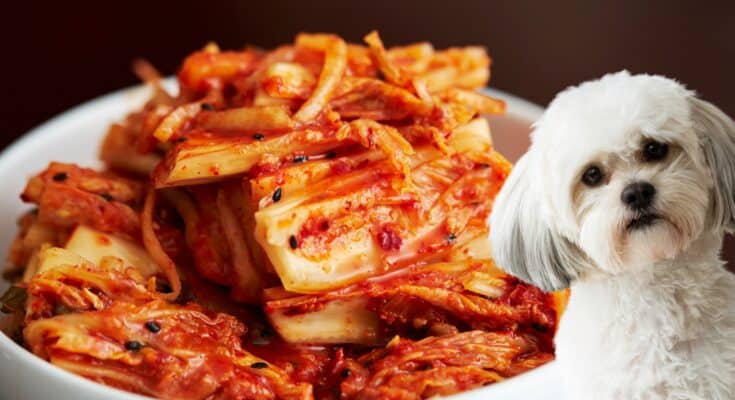
Most store-bought and homemade kimchi contains ingredients that are genuinely toxic to dogs. Even a small amount consumed regularly can build up to serious health consequences.
That said, the answer is not quite as simple as a hard no for everything kimchi-adjacent. Let us break down exactly why Shih Tzus cannot eat kimchi safely, ingredient by ingredient, with the science to back it up.
What Is Kimchi and Why Do Shih Tzus Need to Avoid It?
Kimchi is a traditional Korean fermented dish, typically made from napa cabbage or radish as the base, then seasoned with a mix of garlic, ginger, chili flakes, fish sauce, onion or scallions, and salt. It is then left to ferment, which creates the probiotic-rich, tangy dish we know and love.
The problem? Hepper notes that most kimchi recipes include members of the Allium genus, which are listed as toxic to dogs. Allium plants include garlic, onions, scallions, chives, and leeks. Multiple ingredients in a single jar of kimchi can fall into this category.
Kimchi Ingredients: What Makes It Unsafe for Shih Tzus
One of the most dangerous ingredients for dogs. Causes oxidative damage to red blood cells, leading to hemolytic anemia. Effects can be cumulative.
Also an Allium plant. Damages red blood cells the same way garlic does. All forms are harmful: raw, cooked, powdered, and dried.
Not technically toxic, but causes burning in the mouth, stomach upset, vomiting, and diarrhea. Dogs only have 1,700 taste buds vs. a human’s 9,000, so the experience is unpleasant.
Kimchi requires a lot of salt for fermentation. Excessive sodium in dogs can lead to dehydration, vomiting, and sodium ion poisoning.
Extremely high in sodium. Not toxic on its own but contributes to dangerous salt overload, especially for a small breed like a Shih Tzu.
Plain, unseasoned versions of these vegetables are actually safe for dogs in small amounts. The problem is they are never served alone in kimchi.
The Science: Why Kimchi Is Toxic for Shih Tzus and Dogs
This is not just an abundance of caution. The danger is well-documented in veterinary science.
According to the Merck Veterinary Manual, Allium species contain sulfur-containing oxidants that cause direct oxidative damage to red blood cells (erythrocytes) in dogs. This leads to a condition called Heinz body hemolytic anemia, where red blood cells rupture and can no longer carry oxygen properly. Garlic is noted to be 3 to 5 times more toxic than onion for dogs.
A peer-reviewed study published in PMC confirmed that all preparations of garlic, including fresh, dried, and granulated forms, caused measurable hemolysis in canine erythrocytes. Granulated garlic (the kind often used in marinades and fermented dishes) showed the strongest toxic effect.
A critical detail most people miss: VCA Animal Hospitals explains that the effects of Allium toxicity are cumulative. Small amounts fed regularly will build up in the dog’s system over several days before symptoms even appear. By the time anything is noticed, the damage may already be significant.
Cumulative toxicity: why “just a little” is not safe
Because Allium toxicity accumulates over time, feeding a Shih Tzu small amounts of kimchi regularly is not safer than one large dose. The organosulfur compounds build up and continue damaging red blood cells even days after the last exposure. Symptoms of anemia can appear 3 to 5 days after ingestion.
My Shih Tzu Ate Kimchi. What Should I Do?
If a Shih Tzu snuck a small lick or a tiny piece of dropped kimchi, there is likely no need to panic. Dial A Vet advises offering fresh water to help flush out excess sodium and watching closely for any symptoms. A one-time, very small exposure is unlikely to cause serious harm.
However, contact a vet right away if the dog ate a significant amount, or if any of the following symptoms appear:
| Symptom | What It May Indicate | When It Appears |
|---|---|---|
| Vomiting or diarrhea | Gastrointestinal irritation | Within hours |
| Lethargy or weakness | Early anemia, reduced oxygen in blood | 1 to 5 days later |
| Pale or yellowish gums | Hemolytic anemia, red blood cell damage | 3 to 5 days later |
| Discolored urine (red/brown) | Hemoglobin in urine from ruptured red blood cells | 3 to 5 days later |
| Rapid breathing or heart rate | Body compensating for low oxygen | 3 to 5 days later |
| Excessive drooling or mouth pawing | Burning from chili or spice irritation | Within minutes |
Can Shih Tzus Benefit from Kimchi’s Probiotics?
You might be wondering: kimchi is fermented and full of probiotics. Is there not some benefit there?
Technically, yes. Hepper confirms that fermented foods can benefit dogs in the same way they benefit humans, with probiotic strains like Lactobacillus and Bifidobacteria supporting gut health and immune function. The fermentation itself is not the problem.
But here is the thing: the risks from the garlic, onion, chili, and high sodium far outweigh any probiotic benefit. Nobody would give their dog a supplement that also contained a toxin. The same logic applies to Shih Tzus eating kimchi. There are much safer ways to support a Shih Tzu’s gut health.
Safer Alternatives to Kimchi for a Shih Tzu’s Gut Health
Here is what I give Cooper for probiotic support instead:
- Plain, unsweetened yogurt with live cultures (a small teaspoon is plenty)
- Dog-specific probiotic supplements available from a vet or pet store
- Plain boiled cabbage or radish in tiny amounts, no seasoning, no fermentation
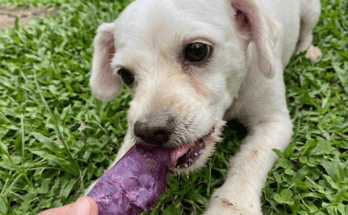
- Plain cooked sweet potato for fiber and digestive support
- Vet-approved fermented foods made specifically for dogs
Can Shih Tzus Eat a Dog-Safe Homemade Version of Kimchi?
Some sources suggest that a dog-safe version of fermented vegetables can be made using only plain cabbage, a small amount of sea salt, and no spices, garlic, onions, or fish sauce. If experimenting with fermented vegetables for a Shih Tzu, this is the only approach worth considering.
But honestly? Even then, always check with a vet first. Shih Tzus are a small breed with a sensitive digestive system, and the salt content in any fermented food needs to be very carefully controlled for a dog their size.
The Quick Reference
Safe Options
- Plain boiled cabbage (tiny amounts)
- Plain boiled radish (tiny amounts)
- Dog-specific probiotics
- Plain yogurt with live cultures
- Always consult a vet first
Keep Away From Cooper
- Traditional kimchi (store-bought or homemade)
- Anything containing garlic or onion
- Spicy or chili-seasoned foods
- High-sodium fermented foods
- Fish sauce or soy sauce
So, Can Shih Tzus Eat Kimchi? The Bottom Line
As much as Cooper would love to join me at the dinner table for a side of kimchi, it is one human food that should stay firmly on my plate. The garlic and onion alone make traditional kimchi unsafe for Shih Tzus, and the combination of chili and high sodium on top of that makes it even more unsuitable for a small, sensitive breed.
If I ever dropped some on the floor and Cooper got to it before I did, I would monitor closely and call the vet if anything seemed off. But as a regular treat or deliberate addition to his diet? Hard pass.
There are plenty of ways to treat a Shih Tzu to something special. Kimchi just does not make the list. I will save it for myself and give Cooper something safer to be excited about. 🐾
Sources & References
- Merck Veterinary Manual: Garlic and Onion (Allium spp) Toxicosis in Animals
- PMC (MDPI Animals): The Effect of Garlic on Heinz Body Concentrations in Canine Erythrocytes
- PubMed: Hemolysis Induced by Onion Poisoning in Dogs (Experimental Study)
- VCA Animal Hospitals: Onion, Garlic, Chive, and Leek Toxicity in Dogs
- DVM360: Toxicology Brief, Allium Species Poisoning in Dogs and Cats
- Hepper: Can Dogs Eat Kimchi? (Vet-Reviewed)
- Dial A Vet: Can Dogs Eat Kimchi? A Complete Guide
- Dogster: Can Dogs Eat Kimchi? (Vet-Approved Nutrition Facts)
- PetsCare: Can Dogs Eat Kimchi? Safe Feeding Tips